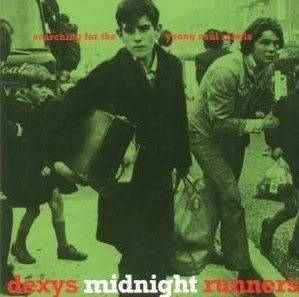
hello readers! it's dexys midnight runners week all week here on GMS.
over the next seven days, we'll be revisiting the peaks and troughs of kevin rowland's brilliant, eccentric career. by re-visiting, i expect i mean posting some youtube videos. we'll also be exploring dexys' intriguing relationship with UK tv comedy. by exploring, i expect i mean posting some youtube videos.
we'll start at the beginning, with 'dance stance (burn it down)' from 1979 - one of the greatest opening tracks, from one of the greatest debut albums, from the greatest british band evarr. except maybe pulp. play it loud. "jimmy? yeah! sal? yeah! for god's sake burn it down..."
Raekwon has always been one of the Wu's most perverse characters - sullen and belligerent where most of his fellow MCs are playful and nerdy, insular and defensive where his long-time foil, Ghostface, plays the ebullient, effusive, eccentric extrovert.
Raekwon's debut album, Only Built For Cuban Linx, is an undisputed classic - groundbreaking and sumptuous, consistently ambitious in its widescreen mafia fantasies, yet endlessly rich in its vivid details, classy production and impenetrable slang. His decision to follow it by replacing producer RZA with a string of no-name, low-rent New York beat-makers, and to swap Ghostface for his clumsy, embarrassing posses, American Cream Team and Ice Water, resulted in one of the most dramatic creative down-turns in rap history. Can he rescue his career with the long-threatened Cuban Linx II?
Raekwon and his third-favourite producer
Raekwon's performance at this year's All Tomorrow's Parties festival offered few clues. The rapper recreated his debut song-for-song, assisted by Ghostface and Theodore Unit, adding a few classic Wu verses here and there (mostly the same ones Ghostface had performed the previous evening). There was no new material and little showmanship, beyond some ostentatious cognac-drinking and a rather fetching beard. GMS is partial to the sight of muscular chaps lumbering around a stage, shouting in unison into microphones while a DJ makes gunshot noises, but many people weren't. The crowd thinned, more rapidly than Ghostface's audience, and more rapidly still once Broken Social Scene brought their Fleetwood Mac-style communal indie drivel to the main stage.
Raekwon may not know much about entertaining ambivalent hipsters, employing handy weed-carriers or beat selection, but he sure knows his way around a dense crime narrative. Not content with re-hashing 'Scarface', Scorsese and John Woo, 'Musketeers of Pig Alley', the best track from his middling third album, The Lex Diamond Story, takes inspiration from D.W. Griffith's pioneering 1912 short noir of the same name. If you've got 15 minutes to spare, the whole film is below, and comes highly recommended by yours truly, and, erm, Raekwon.
More D.W.? 'The Reformers', from the following year, is a priceless skewering of moralising interventionist liberals, as 'Dickensian' in its way as 'Musketeers'. Word to Scott Templeton. The League of Civic Purity - now there's a posse.
Every year, come December, bloggers compile lists of their favourite albums of the past twelve months. And every year, without fail, rap-loving bloggers start to argue about whether mixtapes count as albums.
Those who would exclude mixtapes from their imaginary competition insist on the need for a level playing field. They find one in the legal and commercial constraints governing the creation of albums. Mixtapes' illegal use of un-cleared samples, borrowed beats and previously-available songs, they argue, makes it impossible to judge them on equal terms with commercial releases. Defenders of mixtapes argue that market forces and intellectual property rights provide an arbitrary and unhelpful framework by which to judge works of art. Mixtapes, they argue, offer artists freedom to express themselves without the need to gratify record company marketing departments; they also allow the use of samples that would otherwise be prohibitively expensive.
An aesthetic argument runs in parallel. Critics argue that mixtapes are often uneven, hastily thrown together, and poorly-mastered, and that they offer instant gratification rather than anything of lasting value. Supporters counter that, originality notwithstanding, mixtapes are frequently more coherent and satisfying than albums. Why bar Wale's excellent Mixtape About Nothing from an end-of-year list on the grounds that it was given away for free? Why make apologies for Nas' patchy Untitled when his N****r Tape stands as one of the best releases of his career?
After all, the idea of an album as a 'statement' or free-standing original work of art only developed in the mid-sixties: its gold standard has always been a certain type of predominantly male, white rock music. Hip hop, with its traditions of freestyling and DJing, has more in common with folk music, where performers constantly adapt, re-interpret and add to existing tunes and lyrics. Using the idea of the 'album' to judge rap distorts our appreciation of the art-form: for instance, many consider Kool G Rap one of the all-time great MCs, but he rarely appears on lists of great rap albums, let alone great albums.
None of this matters, of course. Artists will continue to make music, and will, on the whole, struggle to make a living doing so. Bloggers will continue to bicker and list. My opinion? Of course mixtapes aren't albums. They're mixtapes. The clue's in the name.
None of which makes me any the wiser about what the hell's gone on with the new Clipse album, The Clipse present the Re-Up Gang. Is it a mixtape? Is it an album? One thing's for sure: it's bloody awful.
The Virginia duo's series of mixtapes, We Got It 4 Cheap vols. 1-3,saw them adding vocals to familiar beats, frequently improving upon the originals. On Present the Re-Up Gang, they reverse the formula, recycling verses from Volume 3 that originally accompanied tracks by the likes of Shawty Lo and B.G., fitting them instead with original beats. If new rhymes over old beats makes a mixtape, what about new beats under old rhymes? Further muddying the waters, Present appears to have secured a commercial release, via Koch Records - a label that operates in a grey area between albums and mixtapes, offering artists one-off album deals, together with an unusual degree of creative control, low overheads, fast turnarounds, competitive royalty rates and an allegedly relaxed approach to sample clearance. Finally, the logic of claiming to 'present' the Re-Up Gang is baffling. The Gang is made up of the Clipse plus Philadelphia rappers Ab-Liva and Sandman, who featured heavily on all three mixtape volumes, and were given equal billing with the Clipse on the third. What is the point of this album?
None of this would be a concern if Clipse's round-about manner of creating original music was at all successful. Instead, the recycling process has diluted any distinctive qualities the group ever possessed. Fulfilling the dictum that a free market tends towards homogeneity and mediocrity, Clipse have hit the golden mean of turgid drugs-and-money-rap: something like a G-Unit album, but with slightly sharper metaphors and less memorable beats.
When not damping their once-chilling drug-talk with dead-eyed celebrations of wealth, Clipse use the album to air rap's dullest and most self-indulgent theme: record label politics. This mind-numbing tendency, a favourite of the world's most boring rapper, 'Regular' Joe Budden, has become so prevalent that prissy complaints about altered release dates and threadbare promotion budgets have even tainted the latest album by the Roots - an otherwise creative and intelligent group. Clipse's attempt to make a fast buck by recycling lyrics and rush-releasing a sub-par album renders such complaints insincere. The apparent ease with which they reconcile money-talk and self-pity while expecting fans to pay for work vastly inferior to that given away for free six months ago raises questions about their integrity and judgement.
It's interesting that one of the album's recycled verses features threats against Lil' Wayne, another successful mixtape rapper. Where the Clipse's heavy release-schedule has seen them creeping steadily towards mediocrity, Wayne's constant output has seen him embrace eccentricity. The resulting commercial album - though entirely uneven - has already sold over two million copies. Clipse Present the Re-Up Gang would do well to equal G-Unit's Terminate On Sight, which has yet to sell a tenth of that.
GMS had long considered devendra banhart a respectable tyrannosaurus rex tribute act who would never raise his game and pen 'ride a white swan'; always destined to be indie-rock's second-best r. kelly fan.
but here's his new video, for the tropicalia-style 'carmensita'. it brings back memories of watching the mahabharat on saturday afternoons in the early 90s. the BBC needs to bring that back - it was like the wire, only in 9th-century-BC India, and with cardboard weaponry.
'carmensita' also contains mention of a homunculus. uncle lawrencewould be proud.
more fun:
tyrannosaurus - 'deborah' (live at kempton park, 1968)
the new roots manuva video is wicket. the beat isn't 'deep cover', but i like his delivery. as usual with roots, the order of play is eccentric englishness, with no mention of balling and certainly no gatting. it's not gully by any means, but i reckon it's on point. predictably, the contest is likely to end in a draw.
roots manuva - 'again and again'
here's another teaser from his new album, slime and reason, 'buff nuff', a true homage to raekwon's 'ice cream' video:
and more on the sportz theme: 'witness (one hope)'
Hello there! The internets are going ape for the latest viral-blogging think-piece phenomenon: listing your favourite album since the year of your birth. Well, not your birth; my birth.
I’m happy to help out, but I might as easily just list all the Nick Cave and Will Oldham albums, plus the same rap albums as everyone else. So here’s my favourite British albums. How’s about that, eh?
I was born in 1979, and Smashing Pumpkins wrote a song all about it:
The best British album of 1979 was nearly Judas Priest Unleashed in the East, but art-snobbery got the better of me. Anyway, a number of observations:
• The collapse of the British music industry in the late 90s was quite dramatic. A few smaller-scale bands kept things competitive – Mogwai, Arab Strap, Tindersticks and Gorky’s made it in; Hefner, Dawn of the Replicants, Four Tet and McLusky were all contenders. I’m sure the Brit blogrollers could think of more. But aside from breakthrough releases by the Libertines, Franz Ferdinand, the Streets, Dizzee Rascal and the C***plays (and waves of imitators), it’s been a pretty shapeless decade. I'm not crazy about Franz Ferdinand, The Life Pursuit or Curses, but the competition's pretty thin. Thoughts?
• I’m surprised My Bloody Valentine, Primal Scream, Radiohead and trip-hop and didn’t get a look-in. Are you?
• Perhaps I should invest in lots of Elvis Costello and PJ Harvey records to make myself cooler and more knowledgeable.
• 1994 was right difficult.
• I might have forgotten a few.
Here we go, one video per decade:
1979 Joy Division, Unknown Pleasures 1980 Dexys Midnight Runners, Searching for the Young Soul Rebels 1981 Iron Maiden, Killers 1982 Richard & Linda Thompson, Shoot Out The Lights 1983 David Bowie, Let’s Dance 1984 Frankie Goes to Hollywood, Welcome to the Pleasuredome
Frankie Goes to Hollywood - 'The Power of Love'
1985 Jesus & Mary Chain, Psychocandy 1986 The Smiths, The Queen is Dead 1987 Happy Mondays, Squirrel and G-Man Twenty Four Hour Party People Plastic Face Carnt Smile (White Out) 1988 The Pogues, If I Should Fall from Grace with God 1989 Vaselines, Dum Dum 1990 Happy Mondays, Pills, Thrills & Bellyaches 1991 Teenage Fanclub, Bandwaggonesque 1992 Spiritualized, Laser Guided Melodies 1993 Tindersticks, Tindersticks
Tindersticks - 'City Sickness'
1994 Suede, Dog Man Star 1995 Pulp, Different Class 1996 Manic Street Preachers, Everything Must Go 1997 Gorkys Zygotic Mynci, Barafundle 1998 Arab Strap, Philophobia 1999 Mogwai, Come On Die Young 2000 Belle & Sebastian, Fold Your Hands, Child, You Walk Like a Peasant 2001 Tindersticks, Can Our Love 2002 Libertines, Up the Bracket
Libertines, 'A Time for Heroes'
2003 Waterson : Carthy, Fishes and Fine Yellow Sand 2004 Franz Ferdinand, Franz Ferdinand 2005 Art Brut, Bang Bang Rock n Roll 2006 Belle & Sebastian, The Life Pursuit 2007 Future of the Left, Curses 2008 Aidan Moffat, I Can Hear Your Heart
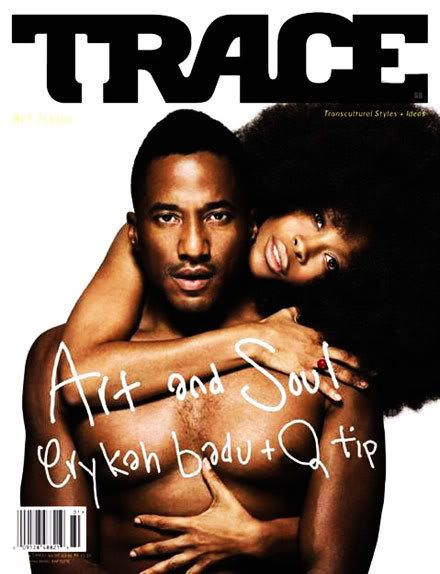
The product was app. invented in 1923 by Leo Gerstenzang, a Polish-born American, who initially named them Baby Gays. In 1926 the name was changed to Q-tips Baby Gays, and later shortened to Q-tips.
A small, thin stick of plastic, paper, or wood with a cotton-wool swab at each end, used in personal hygiene, first aid, etc. In the plural form Q-tips a proprietary name.
1926Lancaster (Ohio) Daily Eagle 8 June 3 (advt.) ‘Q Tips’. The safe and sanitary medical applicators for both babies and adults. 1952Good Housek. Dec. 48/2 (advt.) Hollywood stars and famous make-up experts consider Q-Tips a ‘must’ for glamorous grooming. 1985New Yorker 18 Mar. 37/3 ‘I could be cynical, I really could,’ said Gary Epstein, whose business it is to clean cars with fine lotions..toothbrushes and Q-tips. 2000 P. SAMPSON in J. Adams et al. Girls' Night In 269, I get a pain in my own [ear], like when you stick a Q-tip in too far.
that ought to clear things up. i hope q-tip releases a record this year - he's really good. look:
Do you know what it's like falling in the mud and getting kicked, in the head? With an iron boot? Of course you don't, no one does, that never happens. Sorry, Ted, skip that, it's a dumb question.
tracks posted here are for sampling purposes only and will be deleted in a few days. if you are, or represent the band, and desire the deletion of a track, please contact GMS and it will be done. support bands - buy their music, go to their shows.