Showing posts with label album review. Show all posts

Thursday, 6 August 2009

Men and their hats


Slaughterhouse is a boyband aimed at twenty- and thirty-something rap fans who spend a lot of time on the web, and who feel that things "used to be better". Their debut album--also named Slaughterhouse, to belabour the point--follows a series of unofficial mixtapes including, somewhat gloriously, one called The Leaked Shit. The key points being:
  • to 'step up' from the 'mixtape scene' with an album that is 'shorter' and 'more focused', full of unfamiliar tunes by cheap producers;
  • lots of boasting, some of it recorded after Michael Jackson died;
  • to sell some records to people who buy records;
  • the condition of being "on one's grind"; and
  • to not be the lousiest member of Slaughterhouse.
What with the emphasis on bombast and dense rhyme schemes, there isn't much to separate our four musketeers: the lack of variety in the pacing, flows and concepts is the reason this isn't too much fun after four or five tracks. All of this lot have free mixtapes on offer, mostly superior, though when this works, it's very good. But let's try to tease apart these rapping buddies:

Joe Budden
is an Atlas of self-regard, forever shouldering the weight of public indifference to his career in the entertainment industry. At one stage, he suggests something like "I had a fight with my shadow after he dissed me on Twitter", which, even in jest, suggests he lacks more perspective than a high-mediaeval cyclops. No Bushwick Bill. Playing with other kids helps Joe a bit here, encouraging him to 'come out of his shell' and 'pack it in for a bit', though his chums do indulge him with a couple of unlistenable moaning Tupac-style "aksk God why" tracks towards the end. On the front cover, Joe is pictured sporting a hat.

Joell Ortiz
has a deep-seated need for affection and approval, what with his 'class joker' schtick, his breathless reverence for everything old, and his funny beard. I do hope this potential weakness doesn't lead him to fall in with the wrong crowd, for Joell's principal poke-power is helpfulness: his ad-libs, hooks and serviceable raps hold the album together. Given more confidence, he could have made Slaughterhouse more than the sum of its parts. As it is, this has neither the sense of place to match his The Brick: Bodega Chronicles nor the versatility and fun that marked Covers the Classics. On the front cover, Joell is pictured sporting a hat.

Crooked I
has a simple job, which he fulfils creditably. Whereas New York is made of burning dustbins, hard knocks, jazz, and concrete stuff, Crooked's native Los Angles is a cartoon city, full of curvy women, sticky weed, funk, and colourful gang handkerchiefs. The album could have done with a few more tracks that played up these contrasts, and a few more beats favouring his behind-the-beat, half-whispered flow; at times, he is indistinguishable. On the front cover, Crooked I is pictured sporting a hat.

Royce da 5' 9"
is best suited to mixtapes, where he can say jaw-droppingly unpleasant things in exceptionally complex metres without interference from 'radio', 'A&R dudes' or 'Tipper Gore'. Not that Slughterhouse are going to be guesting on Graham Norton anytime soon, but albums seem to cramp Royce's style. Is he willing himself to fail? Would he like to share with the group? Again, the production doesn't flatter him: running barmy adenoidal rings around beats only succeeds as long as the beats can carry the song. On the front cover, Royce da 5' 9" is pictured sporting a hat.

Here's the most bangingest track:


Sunday, 8 February 2009

NASA - 'The Spirit of Apollo' - album review


if i could invite anybody i wanted to a dinner party, i'd invite barack obama, homer simpson, a porn star, and einstein. the conversation would flow, and a few of the world's more pressing problems would be set to rights. on the menu would be baked potatoes and wine.

in the background, i'd play NASA's guest-list-heavy fantasy-dinner-party past-present-and-future-of-critically-approved-rap-rock-and-pop debut album, the spirit of apollo. i've no idea who these NASA folks are, except that they're two middle-aged chaps with silly names, as if gnarls barkley didn't put them off. i do know that they've got a massive, retro-looking rolodex, from which to make hip musical alchemy and shit. hence: collabos :-
NASA - 'Hip Hop' (feat. KRS-One, Fatlip & Slim Kid Tre)


tom waits makes great records by prentending to be mad; kool keith makes mostly-awful records, possibly because he is mad. david byrne is gawky, white and likes gadgets; chuck d is shouty, black, and likes terrible puns. ol' dirty bastard is un-self-conscious, drunk and dead; karen o is hip, sardonic and possibly past it. so it goes on. will they make musical magic, fuelled by baked potatoes and wine? or will it be more like that dreadful movie starring raekwon and bijou philips?

of course, reader, it's neither of these. the spirit of apollo pitches its pretend-united-nations tent somewhere between an above-par jurassic 5 record with a more singing, and a woolly-minded-liberal version of neon neon. "money is the root of all evil", sings someone who might be seu jorge. "you can be whatever you want to be", wails david byrne. "hip hop", declares KRS-One, king of say-what-you-see. "sizzla", replies sizzla. "strangling the monkey with the hands of a clock", suggests tom waits. all civilised repartee, at least until scarface arrives.
NASA - 'Money' (feat. David Byrne, Chuck D, Ras Congo, Seu Jorge & Z-Trip)


ten years hence, this won't look a shabby monument to late-00s mash-up hipsterism, especially if you skip over santogold's contributions (or leave them in as a warning to future generations). then again, this exactly the record the beastie boys could have made in 1999 with their grand royal roster and friends. nor does it look that far removed from 1989, when chuck, KRS, del tha funkee homosapien, kool keith et al were more than just list fodder, and when another daft-named white hip hop act was pushing things forward.

so, to break the ice, whatever happend to peanut butter wolf?

Sunday, 3 August 2008

Pop Just Ate Itself: Clipse release a turd

Every year, come December, bloggers compile lists of their favourite albums of the past twelve months. And every year, without fail, rap-loving bloggers start to argue about whether mixtapes count as albums.

Those who would exclude mixtapes from their imaginary competition insist on the need for a level playing field. They find one in the legal and commercial constraints governing the creation of albums. Mixtapes' illegal use of un-cleared samples, borrowed beats and previously-available songs, they argue, makes it impossible to judge them on equal terms with commercial releases. Defenders of mixtapes argue that market forces and intellectual property rights provide an arbitrary and unhelpful framework by which to judge works of art. Mixtapes, they argue, offer artists freedom to express themselves without the need to gratify record company marketing departments; they also allow the use of samples that would otherwise be prohibitively expensive.

An aesthetic argument runs in parallel. Critics argue that mixtapes are often uneven, hastily thrown together, and poorly-mastered, and that they offer instant gratification rather than anything of lasting value. Supporters counter that, originality notwithstanding, mixtapes are frequently more coherent and satisfying than albums. Why bar Wale's excellent Mixtape About Nothing from an end-of-year list on the grounds that it was given away for free? Why make apologies for Nas' patchy Untitled when his N****r Tape stands as one of the best releases of his career?

After all, the idea of an album as a 'statement' or free-standing original work of art only developed in the mid-sixties: its gold standard has always been a certain type of predominantly male, white rock music. Hip hop, with its traditions of freestyling and DJing, has more in common with folk music, where performers constantly adapt, re-interpret and add to existing tunes and lyrics. Using the idea of the 'album' to judge rap distorts our appreciation of the art-form: for instance, many consider Kool G Rap one of the all-time great MCs, but he rarely appears on lists of great rap albums, let alone great albums.

None of this matters, of course. Artists will continue to make music, and will, on the whole, struggle to make a living doing so. Bloggers will continue to bicker and list. My opinion? Of course mixtapes aren't albums. They're mixtapes. The clue's in the name.


None of which makes me any the wiser about what the hell's gone on with the new Clipse album, The Clipse present the Re-Up Gang. Is it a mixtape? Is it an album? One thing's for sure: it's bloody awful.

The Virginia duo's series of mixtapes, We Got It 4 Cheap vols. 1-3, saw them adding vocals to familiar beats, frequently improving upon the originals. On Present the Re-Up Gang, they reverse the formula, recycling verses from Volume 3 that originally accompanied tracks by the likes of Shawty Lo and B.G., fitting them instead with original beats. If new rhymes over old beats makes a mixtape, what about new beats under old rhymes? Further muddying the waters, Present appears to have secured a commercial release, via Koch Records - a label that operates in a grey area between albums and mixtapes, offering artists one-off album deals, together with an unusual degree of creative control, low overheads, fast turnarounds, competitive royalty rates and an allegedly relaxed approach to sample clearance. Finally, the logic of claiming to 'present' the Re-Up Gang is baffling. The Gang is made up of the Clipse plus Philadelphia rappers Ab-Liva and Sandman, who featured heavily on all three mixtape volumes, and were given equal billing with the Clipse on the third. What is the point of this album?

None of this would be a concern if Clipse's round-about manner of creating original music was at all successful. Instead, the recycling process has diluted any distinctive qualities the group ever possessed. Fulfilling the dictum that a free market tends towards homogeneity and mediocrity, Clipse have hit the golden mean of turgid drugs-and-money-rap: something like a G-Unit album, but with slightly sharper metaphors and less memorable beats.

When not damping their once-chilling drug-talk with dead-eyed celebrations of wealth, Clipse use the album to air rap's dullest and most self-indulgent theme: record label politics. This mind-numbing tendency, a favourite of the world's most boring rapper, 'Regular' Joe Budden, has become so prevalent that prissy complaints about altered release dates and threadbare promotion budgets have even tainted the latest album by the Roots - an otherwise creative and intelligent group. Clipse's attempt to make a fast buck by recycling lyrics and rush-releasing a sub-par album renders such complaints insincere. The apparent ease with which they reconcile money-talk and self-pity while expecting fans to pay for work vastly inferior to that given away for free six months ago raises questions about their integrity and judgement.

It's interesting that one of the album's recycled verses features threats against Lil' Wayne, another successful mixtape rapper. Where the Clipse's heavy release-schedule has seen them creeping steadily towards mediocrity, Wayne's constant output has seen him embrace eccentricity. The resulting commercial album - though entirely uneven - has already sold over two million copies. Clipse Present the Re-Up Gang would do well to equal G-Unit's Terminate On Sight, which has yet to sell a tenth of that.


Tuesday, 20 November 2007

Album review – Grace Potter and the Nocturnals – ‘This Is Somewhere’


Striking a blow for gender equality, Grace Potter leads her band of Nocturnals into the traditionally-male preserve of blue collar American bar-band rock. And, full marks: she proves that a woman can do chest-pounding choruses, earnest rootsy versifying and veiled political dissent just as effectively as the most macho of Tom Petty wannabes.

As the title suggests, This Is Somewhere is decided yet vague. Potter’s voice is strong, unwavering and compelling, while the band sounds entirely at home knocking out driving, soul-inflected rock that would be at home in a stadium or a dive. But the lyrics are allusive and elusive, aiming towards the universal and filled with conventional rock lingo. The clearest themes are patriotism (in the critical-of-government sense), “trouble”, life on the road, people called “babe”, and final judgement. Are the men on the front cover recreating the Iwo Jima flag-raising, or just struggling with a gazebo?

The performance is impressive – flawless, in a sense – but its single-mindedness and its wide-eyed homages to rock mythology sacrifices any sense of intimacy or self-doubt, qualities that would lift it out of self-imposed genre limitations. But once the 24-year-old Potter finds her own stories to match the voice, she could be Gillian Welch with powerballads. (This would be a good thing).


Artist homepage


Buy This Is Somewhere

Monday, 2 April 2007

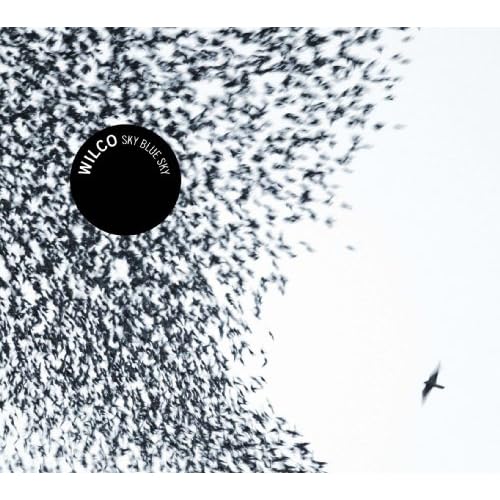
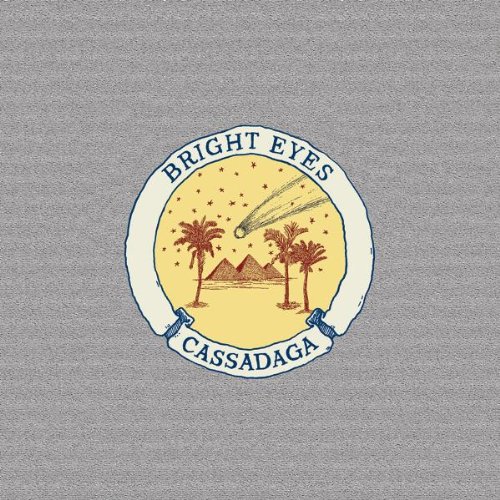
Bright Eyes 'Cassadaga' vs Wilco 'Sky Blue Sky'


Music, as everybody knows, is a big competition. So who’s made the best hotly-anticipated easy-listening indie album with scrutiny-inviting lyrics from a prolific, troubled frontman of Spring 2007? Is it Bright Eyes, with Cassadaga, in which Conor Oberst gets more political than ever, over rollicking roots-rock from his current backing players? Or is it Wilco’s Sky Blue Sky, in which Jeff Tweedy finds redemption and comes to terms with his personal demons through 70s AM-radio rock and skronkly guitar solos? At GMS, we believe that music is not only a competition, but that it is reducible to scientific evaluation. So, ten essential categories, marks out of ten for each.


1. Opening lines
A crucial chance to set the tone:
Bright Eyes gets his Fanon on: “Corporate or colonial, the movement is unstoppable. Like the body of a centrefold it spreads.” Big, yes. Clever? Clunky. 4
Wilco: “Maybe the sun will shine today. The clouds will blow away.” Aaaaah – Wilco! A clear winner. 8

2. Alliteration
The secret of good poetry is alliteration, or assonance, or consonance, or whatever.
Bright Eyes: ‘The Soul Singer in the Session Band’. Dude is a poet! 9
Wilco: ‘On and On and On’. Points deducted for repetition. 5

3. Subliminal shots at Jay
Too many bands are covering their own weaknesses by calling out Hov.
Bright Eyes: “
Hey, where have all the dancers gone? Now the music doesn't play. Tried to listen to the river but you couldn't shut your mouth. Better take a little time to level out.” Conor, please leave it alone. Don’t throw rocks at the throne. 1
Jeff Tweedy is on some laid-back ‘Beach Chair’ middle-aged ‘ish here. No shots at Jigga. 10

4. For the ladeez
Ladies: my Mercedes.
Conor used to hold it down for the honeys with a couple of r’n’b bangas on every album, and those big round eyes of his. But now he’s more interested in fiscal policy. Ick! 0
Jeff Tweedy’s a nice chap. No more troubling references to thumping girls like on Summerteeth. He even calls his sweetheart’s mum for advice about the washing. Aww. 10

5. For bumping in the whip
Bright Eyes’ ‘Four Winds’ is clearly a street anthem, with its ‘Santa Claus Is Coming To Town’-style violin hook. But the rest is a bit overwrought for getting your drank on in a hooptie. 4
Wilco, on the other hand, are on cruise control, sunroof down, wind breezing, guitars ringing. Drive slow. 9

6. Overall commitment to realness
Both score pretty highly here.
Oberst is looking up from his adolescent navel and taking on this imperfect world, while Tweedy bears his soul about the troubles and small victories of life and love in middle age. Bright Eyes aim big and don’t quite make it. 7
Wilco are more humble, but also more rewarding. Plus, I hear that Tweedy still visits the ‘hood when the cameras aren’t rolling. 8

7. Number of instruments used
No indie band is worth my respect unless they cripple themselves financially by paying to take a farfisa player on tour.
Bright Eyes run the show here – more instruments than songs! 10
Wilco are hardly trying – the songs are all stripped back and simple, as are the lyrics. Just a few points for a couple of blazing guitar solos from Nels Cline. Jeff could even play these songs solo. 3

8. Solutions offered to the war in Iraq
In 2007, western leaders are reading Pitchfork and logging on to elbo.ws to work out what to do next.
Bright Eyes offer a lot of political angst. But how much ice would this wordy bluster cut with a military man? Maybe you’re putting them off? 3
Wilco are done with being angry. The (blue) sky is (sky) blue and they’re opening themselves up to love. It’s nice. Can’t we all just get along? 6

9. Swearing
I never swear, but I love people who do.
Conor said a swear and reckons he’s done it with a lady. Bonus. 10
Jeff did not say a swear. 0

10. Degree of Springsteen influence
Bright Eyes sound very Seeger Sessions with their political country-folk revue steez. 8
Wilco go the Steely Dan / Television route instead, but pull it back with the line “
I remember my mother’s sister’s husband’s brother working in the goldmine full-time,” and a reference to blue jeans, plus general ‘Tunnel of Love’-era redemption themes. 4

Overall scores

Bright Eyes Cassadaga 55

Wilco Sky Blue Sky 63

Wilco are your winners! Take Bright Eyes away and dispose of them at once.

More fun:

Most of Cassadaga on the hype machine
Buy Bright Eyes

Most of Sky Blue Sky on the hype machine
Buy Wilco

Monday, 5 March 2007

new release round-up


Big day for album releases - a flood, if you will: here are the ill-considered thoughts.


Three generations of clattering smack-head goth-punk howlers go head-to-head: long-faced Dickensian art-school NME faves the Horrors release their debut, ‘Strange House’; facially-foliated mid-life priapists Nick Cave, Warren Ellis, Martyn Casey and Jim Sclavunos resurrect the Birthday Party with a knowing wink under the Grinderman soubriquet; and mummified punk/grunge/stoner progenitors the Stooges unveil their first original studio album in over three decades with ‘The Weirdness’.

The GMS vote is always going to go to Nick Cave, and Grinderman feed that uncritical appetite in the best possible way. Dumb fun. (A-) The Horrors are surprisingly good: the buzzsaw Cramps guitars, carnival Hammond and Addams Family melody lines are all in place, while whatsisface growls appropriately, and with enough conviction to lift this out of its strict genre limits. (B+) Why anybody would buy the Stooges’ embarrassing mall-punk effort over these two is a mystery, but in case you were considering it, don’t. (D)


Arcade Fire’s ‘Neon Bible’ is also out today. Haven’t changed my opinions, haven’t stopped playing it incessantly either. Very nice. (A-)

Patrick Wolf’s ‘Magic Position’ is much better than his live show. I preferred ‘Wind In The Wires’, but this is just as accomplished. Reminds me of Tears For Fears without the po-faced twattery. (B+)

If we ignore the Kaiser Chiefs, maybe they’ll go away. (D)

Then again, people have been ignoring Idlewild for a while, and they’re still plugging away. ‘Make Another World’ is more of Morrissey’s lyrics sung through Michael Stipe’s loudhailer. They’re pretty good at it, mind: this is one of their most consistent efforts. (B)

Explosions In The Sky’s rollicking post-rock template ain’t broke, and they haven’t fixed it on ‘All Of A Sudden I Miss Everyone’. Well-constructed and pleasing in its marshalled bombast as ever, I still find them a bit contrived. Listen to The Workhouse instead, people. (B-)

I avoided !!! first time round, stung by bad dance-punk experiences with Radio 4 and the Rapture. Their second LP, ‘Myth Takes’ doesn’t do much to change my mind: it frequently seems to be on the verge of something good, but always ends up messy, irritating and uncertain of its own agenda. Reference points, as ever, Happy Mondays, ‘Housequake’ by Prince, some pun on ‘party politics’. (C)

El-P’s ‘I’ll Sleep When You’re Dead’ isn’t out for a couple of weeks, but from the leaked promo, it’s very very very good indeed. The all-star cast of guests complements rather than distracts. Early Album Of The Year contender. (A)

Consequence’s ‘Don’t Quit Your Day Job’ is also out at some point soon. I know he got there first, but his flow is too close to Kanye West’s for my liking. Like Kanye, he seems unclear whether he wants to be conscious, flossing or gully, to use the parlance. Better production than ‘Food and Liquor’, worse verses than ‘Blue Collar’, then. (B-)


More fun:

Several of these streaming over at nme.com

Tuesday, 20 February 2007

Yelping indie round-up: Modest Mouse, Clap Your Hands Say Yeah

It’s ironic – not to say somewhat confusing and dispiriting – that two bands so beloved of the comment-friendly blog culture have produced highly-anticipated albums that are so resistant to the formation of strong opinions. For all their qualities – and failings – Clap Your Hands Say Yeah’s second album, ‘Some Loud Thunder’, and Modest Mouse’s new, Johnny Marr-assisted effort, ‘We Were Dead Before The Ship Even Sank’ (que?) are united in their failure, or refusal, to produce a strong reaction, in this reviewer at least.

Heightened expectations seem to have hung over both bands, and to have contributed to the impenetrable character of their albums. But they’ve responded to those expectations in opposite ways. CYHSY have turned inwards, and ‘Some Loud Thunder’ concentrates on refining and developing the band’s own sound. There aren’t any obvious singles or dancefloor fillers, but then that’s the point: remember ‘You Could Have It So Much Better’? Instead, this a practice-room album, the doors shut to the outside world, the groove allowed to lead proceedings. The result is often frustrating – long periods with little to show for the noodling – but when it works, as on standout tracks such as ‘Love Song no.7’, it’s all the more rewarding. Less tuneful and less polished than their debut, ‘Some Loud Thunder’ is a grower, suggesting at least that CYHSY is a band in a process of evolution, and one that is likely to continue producing interesting and vital music. (B)

Modest Mouse have taken the road more travelled, and seem to think they’ve raised their game to meet the public’s expectations. U2, the Smiths, Snow Patrol: all are within Isaac Brock’s sights. But here’s the problem: before this, and even on ‘Good News…’, Modest Mouse were impossible to pin down: an O.C. anthem here, a Tom Waits rhumba there. In ironing out their kinks, honing their sound, and consolidating the sound of ‘The Moon and Antarctica’ and ‘Good News’ into an unchallenging mid-paced set, Modest Mouse are aiming for a constituency that only exists in the ‘crossover indie’ aggregates suggested by annual round-ups and last.fm recommendations. Does this sort of thing really connect with anyone? Is there any content, lyrical or musical, to connect with? Of these two underwhelming albums, Modest Mouse’s seems the more focused and ambitious, but the smart money is on Clap Your Hands. (C)


More fun:

Stream most of ‘We Were Dead’ at the hype machine

And likewise for ‘Some Loud Thunder’

which is IN STORES NOW

Buy Modest Mouse at Amazon

Sunday, 18 February 2007

Wu-Tang affiliates round-up: Mathematics, Hell Razah


Picture courtesy ohword.com

2007 looks set to be a make-or-break year for the Wu. It’s the tenth anniversary of their last critically- and commercially-successful statement, ‘Wu-Tang Forever’. The perceived decline in the genre during the intervening period, brought into focus by the ongoing debate over whether ‘Hip Hop Is Dead’, has provided an opportunity for the Wu to reassert their position at the cutting edge. “How can hip hop be dead if Wu-Tang is forever?” RZA recently asked. A year ago, such a statement would have seemed absurdly out of touch. Now it’s a beacon of hope. For every hopeless flop (Method Man, Inspectah Deck, U-God), there’s a success story (Ghostface, Masta Killa). We’ve already had a look at entertaining new work from RZA and ODB, and expectations for Raekwon’s ‘Cuban Linx 2’ and the Wu’s ‘8 Diagram’ are incredibly high for acts suffering from a ten-year creative slump.

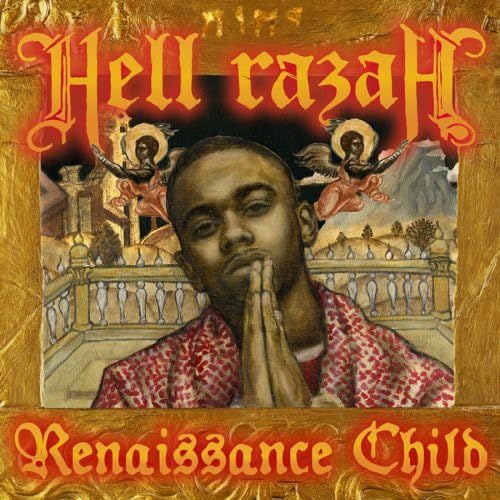
Where the Wu go, so their affiliates are bound to follow. MCs such as Killah Priest, alienated by RZA’s lack of support and creative focus, are returning to the fold. Creative rebirth is at the heart of two new releases from Priest’s Black Market Militia co-hort Hell Razah. ‘Back Into The Renaissance’ is a free mixtape, with Razah rhyming over golden age beats from the likes of Public Enemy and Big Daddy Kane. He makes the purpose explicit on the first track, copping the James Brown sample that Nas used on ‘Where Are They Now?’ Razah’s thoughtful, deadpan, menacing flow fits well with such an approach. Razah is a lyricist, from the same school of thought as GZA or Killah Priest. Thematically, there’s nothing strikingly new here: violent threats, eastern mysticism, radical politics and dedication to the art. But as an MC he’s (huh) a cut above – rhymes a little more complex, themes explored a little more deeply, punchlines a little wittier than your average. (B+)

The mixtape accompanies Hell Razah’s solo debut, ‘Renaissance Child’. As the title implies, the rebirth of hip hop, of the Wu, and of Razah’s career are dominant themes. Lead single ‘Buried Alive’ seethes with bitterness at years of frustration, aiming threats at various record company executives, but it’s never as witty as GZA’s classic demolition-job: “First of all, who’s you’re A&R? A mountain climber who plays an electric guitar?” But as the album progresses, the bitterness gives way to more positive and optimistic aspects of rebirth. ‘Renaissance’ finds Black Market Militia members Timbo King and Tragedy Khadafi, along with RA The Rugged Man, embodying the high points of four decades of black culture: “If I’m not BIG then I’m the closest / I’m Richard Pryor before multiple sclerosis”, tastefully. ‘Project Jazz’, with Kweli and MF Doom is a much more rewarding tale of upbringing in the ghetto than Kweli’s own ‘Happy Home’. Wu affiliation can be seen as a mark of mediocrity, particularly when the group flooded the market with rush-jobs in the late 90s. ‘Renaissance Child’ is a measured, impressive debut that shouldn’t suffer by association with lesser efforts from lesser MCs. (A-)

The same can’t really be said for ‘Mathematics Presents: Wu-Tang and Friends Unreleased’. A hodge-podge compilation reminiscent of ‘The Swarm Volume 1’, this collects so-so remixes from the Wu (‘The W’, ‘Wu Banga’) and its major players (yet more Ghostface, on ‘Maxine’ and ‘Wise’), along with lesser-knowns such as M-Speed, Eyeslow and Hot Flames. Like ‘The Swarm’, there are a couple of standouts – ‘King Toast Queen’ has Theodore Unit soul man Solomon Childs leading an Al Green-style tribute to the ladeez. Shyheim’s two appearances sound impressively menacing, a reminder of his above-average skills. But there’s a lot here that’s pointless or worse: ‘Eggs Hash and Grits’ is the low-point, a misogynistic rant that sets new levels of ignorance. Avoid. (C)

More fun:
Hell Razah – ‘Young, Right & Exact’
Download ‘Back Into The Renaissance’
Buy ‘Renaissance Child’
Buy ‘Unreleased’

Thursday, 15 February 2007

ODB - 'A Son Unique'


There’s something wrong with the world when an album like this gets mired in label hell and litigation for the best part of two years, while there’s a new tribute to Tupac every time a label exec can find twelve new rappers who’ve sold more than twenty mixtapes each. Because while grave-robbing the Shakur archives repeatedly throws up ill-matched and uneven collaborations full of false piety, ‘A Son Unique’ – most of which was intended as a proper record rather than a posthumous collection – is the liveliest rap album to (not) see the light of day in a long while.

Rap’s current, bleak obsession with detailing the daily routine of crack dealership is turned upside down, as ODB raps from a crackhead’s perspective and is loving every minute (kids, say no). Unlike the Wu stylings of ‘Return to the 36 Chambers’ or the beserk outer-limits of ‘N***a Please’, ‘A Son Unique’ is a party record, emphasising ODB’s versatility as an MC – for all the wailing and flailing, he could match most, bar for bar. His charisma holds together what could, in other hands, have been a haphazard collection of producers – RZA, Premier, Neptunes, Mark Ronson – and guest spots (Clipse, Lil’ Fame, NORE, most of the Wu, Macy Gray, Missy Elliot, Joe Budden, Young Chris, Fat Joe).

The two-year delay shows: this sounds very 2005, for those of you who are minded to notice – Boola’s ‘Work For Me’ sounds like Lumidee’s ‘Uh Oh’, while the Neptune’s ‘Operator’ recalls their tight calypso funk, with the Clipse sounding slightly sheepish in laying down romantic come-ons against Dirty’s priapic howls. But that’s hardly an objection: when wilfully ignorant party music from the South is highlighted as one of the reasons why hip hop is dead, ODB shows the genre a way forward from beyond the grave.

A

More fun:

ODB feat. Clipse & Pharrell - 'Operator'

Buy ODB

Wednesday, 14 February 2007

Arcade Fire - 'Neon Bible' album review


Arcade Fire’s second full-length is marked by maturity and downbeat lyrics: the results are mixed, but never less than engaging. Win Butler’s voice has developed: instead of the awkward yelp of ‘Funeral’, his vocals are deeper and more controlled – still quavering, but this time not with fear and confusion, but with outrage, anguish and pride. Think Springsteen: Win clearly has done. Behind him, the band’s all-in whistles-and-bells approach has been streamlined: horns and strings work with the rhythm section, rather than against it, creating a new urgency that makes their recent Clash covers seem all the more appropriate. The lyrics drive the point home: “you got your problems, and me I got mine”, declares Butler on ‘Ocean of Noise’, appropriating the stoic romanticism of many a Springsteen character. ‘Antichrist Television Blues’ leans heavily on this sort of imagery: “Into the light of a bridge that burns, As I drive from the city with the money that I earned ... Any idea where I was at your age? I was working downtown for the minimum wage.”

Arcade Fire aren’t the first indie band to latch onto the Clash and the Boss as handy reference points for combining maturity with passion and political dissent with popular appeal. It’s a little surprising to find a band whose debut possessed such a clear and original voice to draw such immediate and obvious comparisons, but for the Arcade Fire, this isn’t anything like a thoughtless short-cut or a straightforward appropriation. Springsteen imbues his characters with passions and dreams that provide temporary escape from worldly responsibilities (or, at least, lend those responsibilities a sort of dignity and nobility). Butler, on the other hand, draws authority from these honest-working-man tropes, in order to root his own lyrical themes (magic, wonder, faith, an unspecified “we” and “they”) in a new context: one of bitter experience, emotional, social and political. In place of ‘Funeral’’s evangelical call-to-arms, we now find Butler criticising one who is “working for the church while your family dies.” A world-weary Butler could be addressing a younger, more idealistic version of himself: “still a soldier in your mind, but nothing’s left on the line.”

The war on terror and the war in Iraq loom large, through repeated references to “soldiers” and “aeroplanes crashing”. Such lyrics invite critical scrutiny, and it is here that ‘Neon Bible’ is most engaging, but also most frustrating. Butler balances maturity with innocence. He is hesitant to generalize, uncertain of his authority, and aware of his own potential culpability (“I’m through being nice … am I the Antichrist?”). This is often a more satisfying response to political awakening than, say, Jack White’s retreat into childish simplicity or bloke-ish conviviality, or than Kele Okereke’s pompous spokesmanship for any self-righteous cause going. But such doubts can equally dominate, prompting a retreat into vague allusions: a girl, a lighthouse, a well, an island, a King, “a house on fire, a rising sea”, “a river so deep … a mountain so high”. ‘Funeral’ was full of these tropes, but they were redeemed by the album’s passion and purpose. ‘Neon Bible’ is occasionally seems divided between groundless escapism and relentless pessimism, neither of which are endearing. On the album’s least successful song, ‘Windowsill’, the ills of the modern world are listed, prefixed by “I don’t wanna”: Butler can see no way out, no equivalent to ‘Tunnels'’ cry of “Look out for love!” Musically, too, ‘Windowsill’ seems like Arcade Fire by numbers, violin figures failing to connect with a plodding riff.

‘Black Wave / Bad Vibrations’ is more successful, featuring the standard Arcade fare: a “black wave in the middle of the sea”, comradeship and danger (“we’ll make it if we run”), some French; but also highlighting poverty and consumption, presented through overstatement and righteous cadence that would make Broooce proud: “I'm eating in the ghetto on a hundred dollar plate”. The album finishes strongly, with a beefed-up revival of ‘No Cars Go’, rediscovering a sense of community, purpose and faith in the face of uncertainty (“Old folks, let’s go! Don’t know where …”). ‘My Body Is a Cage’ marches into the distance, its gloomy organ chords and stadium-sized drums recalling the darker moments of Frankie Goes To Hollywood (particularly their cover of ‘Born To Run’, as it happens), chanting “You're still next to me, my mind holds the key,
set my spirit free”. It’s a defiant assertion of faith and personal responsibility, in “an age whose name I don’t know.” Arcade Fire’s growing pains are compelling: few albums this year will receive as much scrutiny, and few will deserve it.

A-

More fun:

Buy 'Neon Bible'

Arcade Fire - 'Five Years' (David Bowie cover)

Berkeley Place has a live show from 2005.

Thursday, 8 February 2007

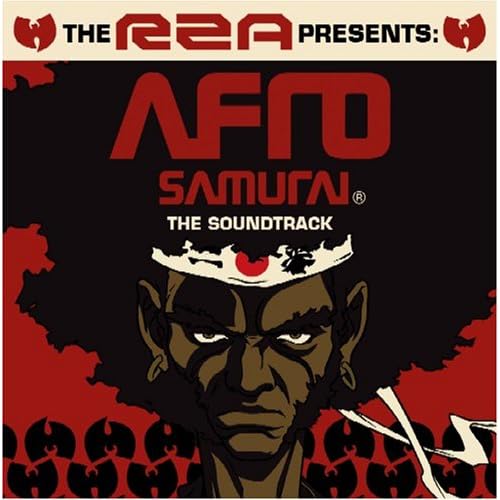
RZA – ‘Afro Samurai OST’


Delayed gratification has been the keynote of RZA’s career for the best part of a decade. His touted solo “masterpiece”, ‘The Cure’, has been promised since before the release of ‘Wu-Tang Forever’ in 1997, and currently resides in the same bracket as Dre’s ‘Detox’, the new My Bloody Valentine record and (surely nobody really believes) ‘Chinese Democracy’. In the meantime, RZA hasn’t been lazy – contributing to Wu albums, solo joints, soundtracks (in particular, to ‘Kill Bill’ and ‘Ghost Dog’), and albums as RZA and Bobby Digital. But all of these releases came with a pre-loaded defence mechanism against heightened expectations, be it the cartoon persona of Bobby Digital, or the stylistic constraints of a soundtrack for somebody else’s project. Nothing is allowed to be a ‘true’ RZA solo album, so nothing is quite as good as ‘The Cure’ surely, must be.

Given this pathological tendency, RZA must’ve been salivating at the prospect of Afro Samurai – a project so silly, and so ‘RZA’, as to cast Samuel L. Jackson as a jive talking blaxploitation anime hero, questing to become the ‘Number One warrior in the world’. No sweat, no pressure: a license to indulge his favourite tropes. Accordingly, we are treated to silky-smooth RnB pastiches (forgetting that R. Kelly’s light years ahead on this bonkers path), sword-swinging nerd rap with Talib Kweli and Q Tip, an underwhelming Big Daddy Kane appearance on ‘Cameo Afro’, and the over-familiar dialogue snippets: c’mon, “give him his sword” already. It’s nice enough, but nothing new, and hardly a stretch. RZA only steps from behind the boards on a few tracks, and on most of those he retreats into his diminishing-returns, misogynistic Bobby Digital persona. “C’mon, Bobby, let’s get some sleep,” suggests an unnamed lady. “Unh,” says Bobby. Only on ‘Fury In My Eyes’ does RZA allow a glimpse of the awesome potential that still lurks: over a melody reminiscent of Kill Bill’s Meiko Kaji moments, RZA’s slurring flow combines with Thea’s feline hook to inspiring effect: “I’m the master of the clan, you can see by the headband / spirit of God becomes one inside man.” It’s enough to sustain those who believe he still has the classic in him to rival ’36 Chambers’.

B+

More fun:

RZA - 'Fury in My Eyes'

Couple of mp3s at So Much Silence.

Buy 'Afro Samurai'

Apples In Stereo – New Magnetic Wonder


Having toyed with the avant-garde, twee, and noise-pop, extremes of the psychedelic genre across their twelve year recording career, the Apples in Stereo return after a four-year hiatus with the controls set for the heart of the indie mainstream. ‘New Magnetic Wonder’ sets its store out early, with the energetic ‘Can You Feel It’ – an introductory celebration reminiscent of ‘Turn It On’ on Flaming Lips’ ‘Transmissions (From The Satellite Heart)’, or the opening track of practically any Cheap Trick album. From there on, the tone is positive, inclusive and unchallenging: the Apples aim to do for the Beatles, the Beach Boys and ELO what the Hold Steady do for the Boss. For both acts, Weezer took a wrong turn after the ‘Green Album’. In the place of bad drugs and post-grunge comedown, we have teary-eyed sentimentality as maturity from beer-drinking boys of a certain age.

Musically, the gang’s all here, including Tremor Controllers Bill Doss and W. Cullen Hart, and Milk Hotelier Jeff Mangum on ‘cow object’. Lyrically, as is typical of Apples albums, the clue is in the title: the positivity and sense of ‘Wonder’ would occasionally benefit from an injection of Mangum’s troubled, dystopian bile. Songs such as ‘Play Tough’ and first single ‘Energy’ are reductive and borderline inane in their repeated vocal hooks, bringing to mind fellow Wilson-freaks Papas Fritas. But, those reservations aside, Robert Schneider has corralled his talented team of Elephant 6 eccentrics into making a focused yet expansive, enjoyable album, as instrumentally rich and compositionally mature as anything to come out of the Elephant stable in recent years. Though this is perhaps not an album that justifies taking two discs to perform the same musical tricks as Dinosaur Jr. tossed off, more effectively, in one single ten years ago.

B


More fun:

Aquarium Drunkard has 'Skyway' and a nice rarity, 'Avril en Mai'.

You Ain't No Picasso has their ode to Stephen Colbert. Bonus points for mentioning Cheap Trick.

Talib Kweli & Madlib – Liberation


Talib Kweli’s been solid but stolid since his critical high-point, the 1998 conscious-rap classic ‘Black Star’ collaboration with the similarly-frustrating SUV salesman Mos Def, almost a decade ago. In advance of his slightly-anticipated new album ‘Ear Drum’ he’s decided for a change of approach: throwing his ouevre at the wall and seeing what sticks. So we get impresario-veteran Kweli, showcasing his Blacksmith protégés (including the impressive Jean Grae) on the ‘Movement’ mixtape, which boasts an odd and slightly exhausting mixture of clever wordplay and gangsta posturing. And then we have the crossover-potential Kweli on UGK’s ‘Country Cousins’, in which the man behind ‘Brown Skin Lady’ defends himself for consorting with the likes of Pimp C. Then we have comic-book geek Kweli, guesting on RZA’s ‘Afro Samurai’ soundtrack to decent effect. Finally, giving the backpackers what they want (according to, um, Kweli), here’s our man rhyming off nine of Madlib’s tasteful indie-soul concoctions.

Whether this glut of releases represents astonishing versatility – stylistically and commercially – or directionless desperation depends on your sympathy for Kweli’s artistic agenda and for his MCing. The former is commendable and appealing: Kweli is a hip-hop purist, a one-MC-one-DJ performer in love with language and eager to raise the tone and the profile of his art-form; but he’s also broad-minded and keen to embrace the range of forms that hip-hop can take. ‘Over the Counter’ is a winning reversal of Clipse’s nihilism, as we find Kweli “on the corner selling it” (political enlightenment, that is!). In this respect, he’s a fellow traveller of Nas, but without the self-importance, and with better beats. Madlib is on fine form here, laying warm, flute-heavy samples over his trademark loping, looping rhythms. Madlib’s consistency occasionally encourages Kweli to raise his game, as on the urgent corner-store robbery narrative ‘Engine Running’, or to loosen up (through slightly awkward references to “the ladies” and “ass”).

On the down-side, Kweli’s MCing is, as usual, worthy and wordy, often piling on similes for their own sake, to little effect (“tripping like Cameron Diaz in Tanzania … using poetic license like onomatopoeia”). Kweli’s often so humourless that you’d swear the Ying Yang Twins were created to restore the cosmic balance. This undermines his artistic ambitions: on. The song that best encapsulates this tension is ‘Happy Home’ – a Black History Month family story of hope, education and love set against the backdrop of Dylan and Vietnam: it’s hard to loathe the sentiment, but that’s what it is: sentiment, not far removed from that ‘60s’ TV movie from a few years back.

Kweli cuts himself a little slack with the format: it’s a stopgap, and it was released for free – a disposable product you’ll want to keep (it's available on retail from February 20th). But his problem since ‘Black Star’ remains the same, in spite of his recent productivity: without Mos Def’s witty, elastic flow as a counterpoint to his stiff, righteous bluster, Kweli may be good for you, but he’s no fun.

B-

More fun:

Macktronic hook you up.